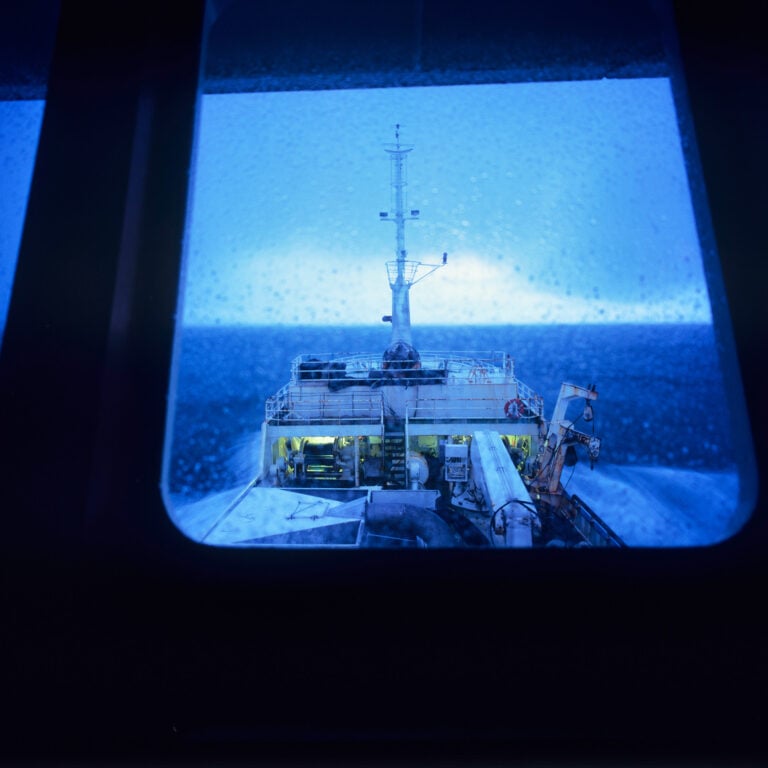
Fisheries have long been the cornerstone of Iceland’s economy. In 1984, just over forty
years ago, a quota system was introduced to manage fish stocks after years of
overfishing. The system sets the amount each vessel or fishing company may catch in a
given fishing year, which begins on September 1.
For the 2025–2026 fishing year, the total allocation from the Directorate of Fisheries
amounts to just over 287,000 cod-equivalent tons, distributed among 456 vessels
owned by 377 companies. The largest quota holders are Brim in Reykjavik with 9.16%,
Samherji in Akureyri with 8.58%, Isfelagid in Vestmannaeyjar with 6.61%, Fisk in
Skagafjordur with 6.36%, and Visir in Grindavik with 4.18%.
The vessels receiving the largest allocations are Solberg OF 1, operated by Isfelagid,
with 10,430 cod-equivalent tons; Gudmundur i Nesi RE 13, from Utgerdarfelag
Reykjavikur, with 9,109 tons; and Drangey SK 2, operated by Fisk, with 6,442 tons.
Cod is both the most valuable species and the one with the largest permitted catch:
204,000 tons. Haddock follows with 79,000 tons, saithe 60,000 tons, golden redfish
41,000 tons, and Greenland halibut 21,000 tons. Other species are below 10,000 tons
each this fishing year. No quotas are set for pelagic species — herring, capelin, and
mackerel — until stock assessments after the New Year confirm the migratory patterns
of the fish entering Icelandic waters.
No quotas are currently issued for lobster and shrimp, as both species were overfished
in Icelandic waters in the past decade.
According to Statistics Iceland, the total export value of marine products in 2024
reached 347 billion ISK (≈ 2.53 billion USD), of which cod accounted for 143 billion ISK
(≈ 1.04 billion USD). To this can be added 54 billion ISK (≈ 395 million USD) from
aquaculture exports, bringing the total export value of fish products in 2024 to no less
than 401 billion ISK (≈ 2.93 billion USD).

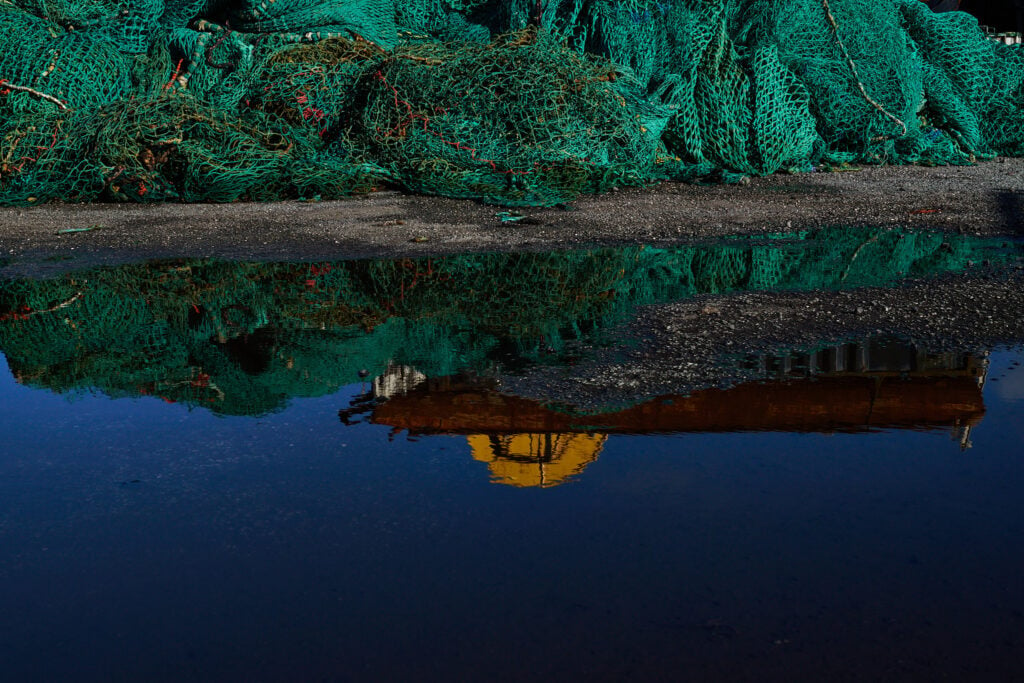
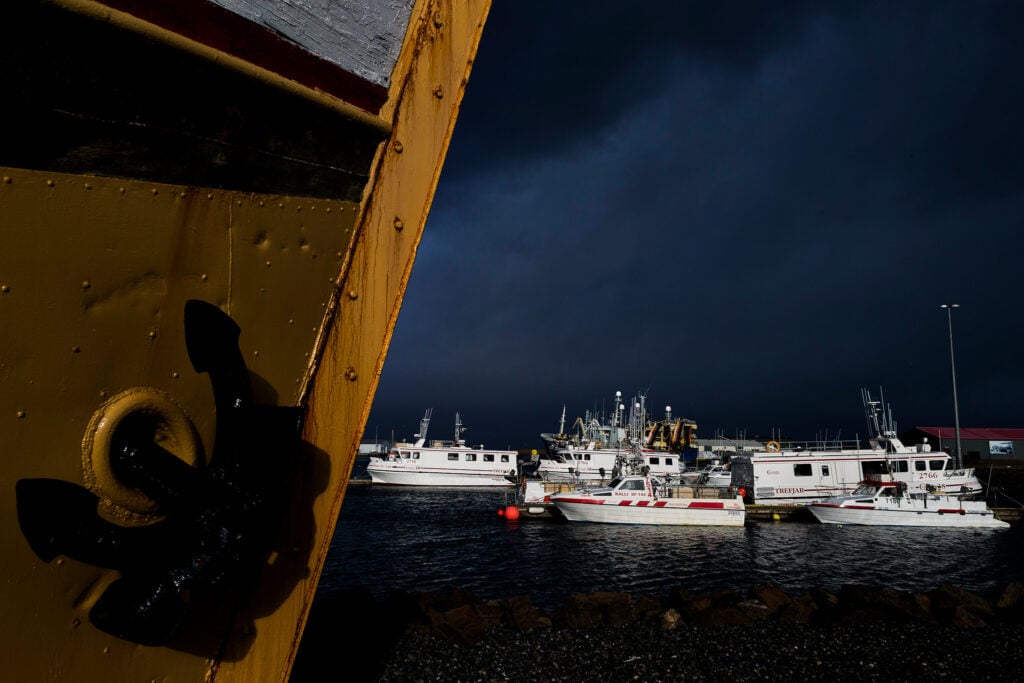
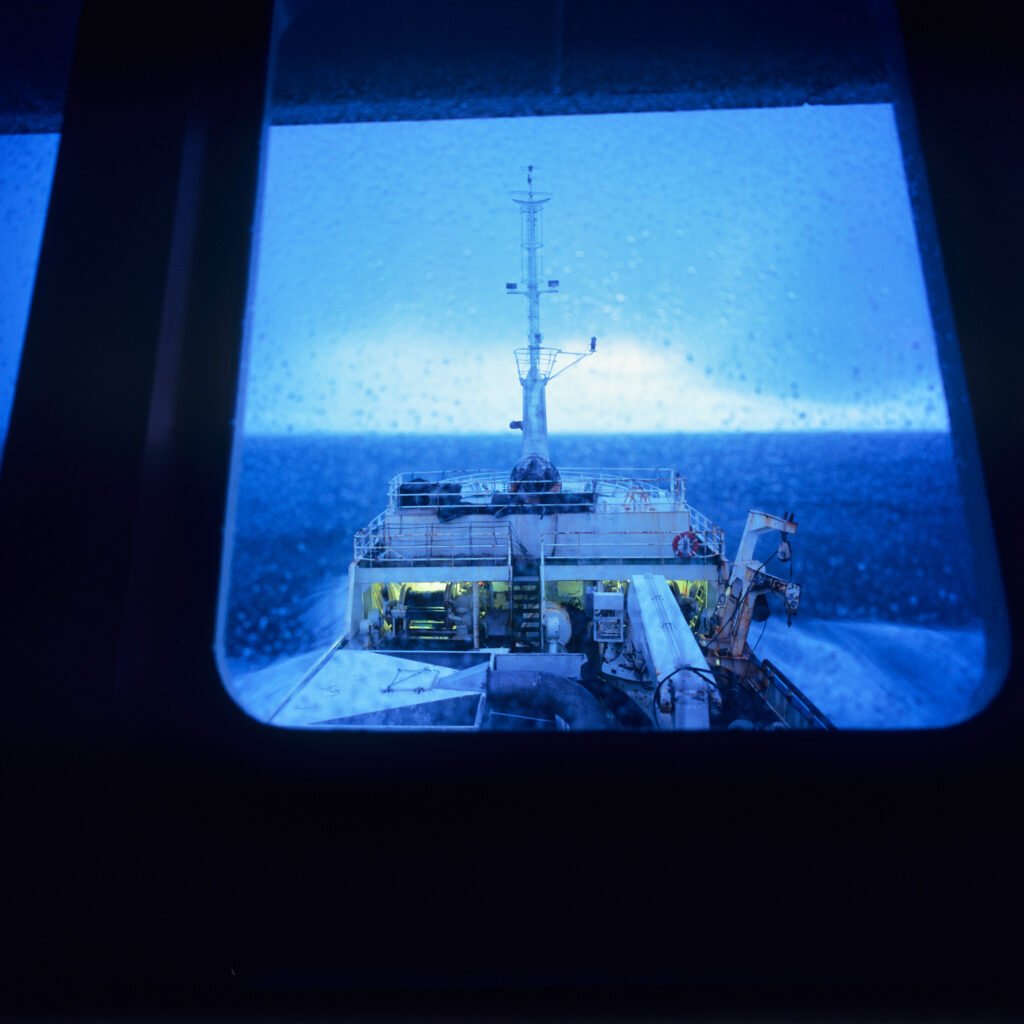
Photos & Text : Páll Stefánsson
Iceland 07/10/2025 – A7C R : FE 2.5/40mm G