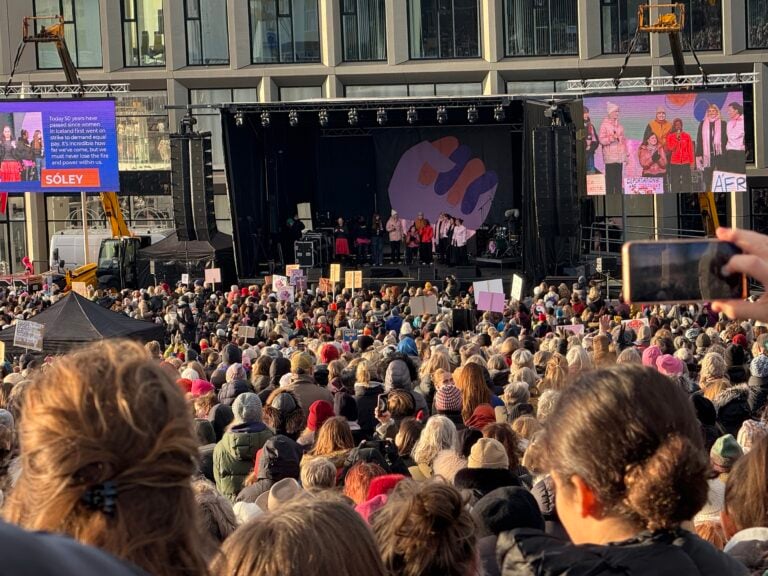
I felt a powerful need to be present in person for this year’s Women’s History March and Protest in Reykjavík, because it was the 50 th anniversary of the 1975 “Women’s Day Off” that so inspired the world — and continues to be a beacon of hope for discouraged feminists like me.
Fifty years ago on October 24, 90 percent of Iceland’s women refused to do any work (paid or unpaid) in a peaceful protest for fair wages and recognition of their daily labor. The strike’s effect on gender equity in Iceland was swift and permanent: Today, Iceland is the most gender-equal nation in the world, as reported in the Icelandic Times.
Yes, that is a fantastic achievement. But women in Iceland are still grappling with rampant sexual violence, devaluation and unfair pay. “If we’re the best country for women, what’s it like in the worst?” one remarked to me.
The United States is hardly the worst country for women. But while Iceland has held the top spot on the World Economic Forum’s Global Gender Gap Report since 2009, the U.S. now ranks a shameful 43. Its position on the report plummeted after the constitutional right to abortion was eliminated in the U.S. in 2022; American women working full-time still earn just 83% of what their male counterparts make.
I was a little girl in Iowa when the first Women’s Day Off took place, but I had already learned the most devastating lesson of my life: that I wasn’t going to be able to do a lot of things I wanted to do in this world, simply because I’d been born with girl parts instead of boy parts.
When I was 4, I’d heard my dad screaming at the top of his lungs in our midwestern living room and had peeped around the corner to see what was going on. I was greeted to the sight of the most important man in my life standing in front of my mother, his face beet red. “NO WIFE OF MINE IS GOING TO WORK!” he shouted, jabbing his finger at her. I watched nervously as Mom stood her ground but said nothing.
My mind raced. Mom was so smart and capable — more so than Dad in many ways. Why couldn’t she get a job? What was wrong with her? It made absolutely no sense. Dad was always saying we needed money. Wouldn’t it help if Mom earned some too? I came to a terrifying conclusion: Being a girl meant Mom couldn’t have a paying job for some unknown reason, and since I was a girl too, I wasn’t going to be able to have a job, either. That meant I wasn’t going to be able to take care of myself when I was grown up. How would I survive? And what if there were other things I wouldn’t be allowed to do because I was a girl? Maybe there was more! I withdrew from the scene, shocked to my core and sick to my stomach.
In case you’re wondering, the job my mom had wanted — the job that had so threatened my father’s manhood as her Provider — had been this: She had simply wanted to sell Avon cosmetics, the girliest job in the world. And as it turned out, Mom won the argument behind closed doors later that night; she became an Avon lady the very next day. But it was too late: I had already learned that being a girl made me deficient in men’s eyes, a hard fact that has been underscored in my life hundreds, probably thousands, of times over the past 50 years.
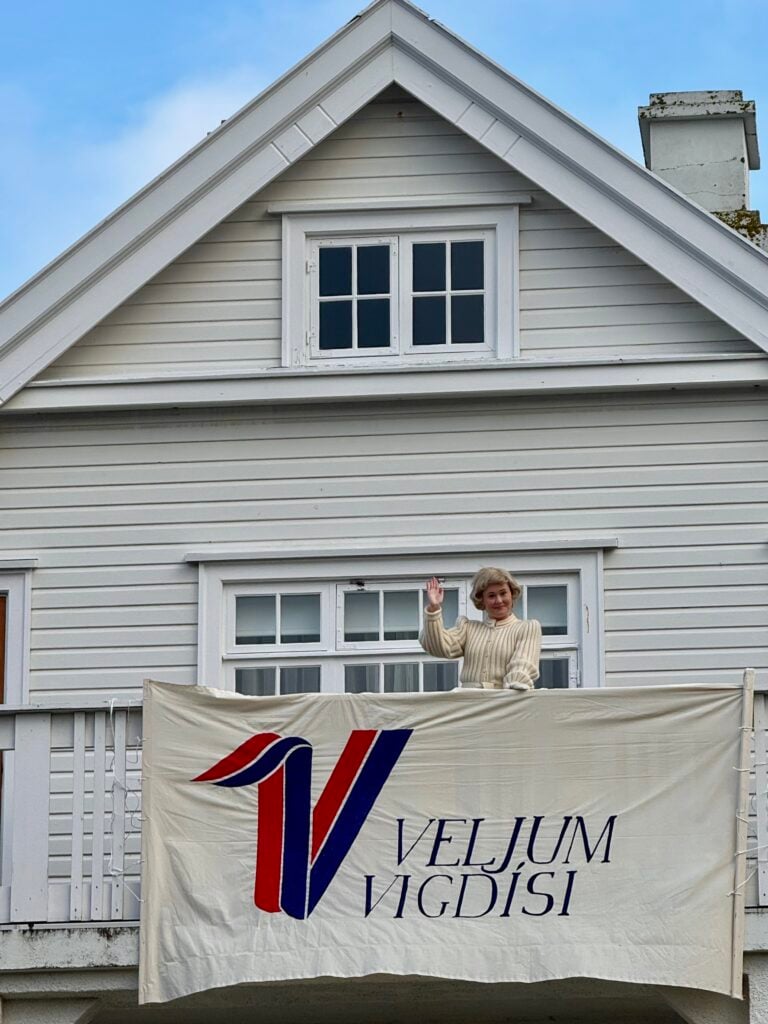
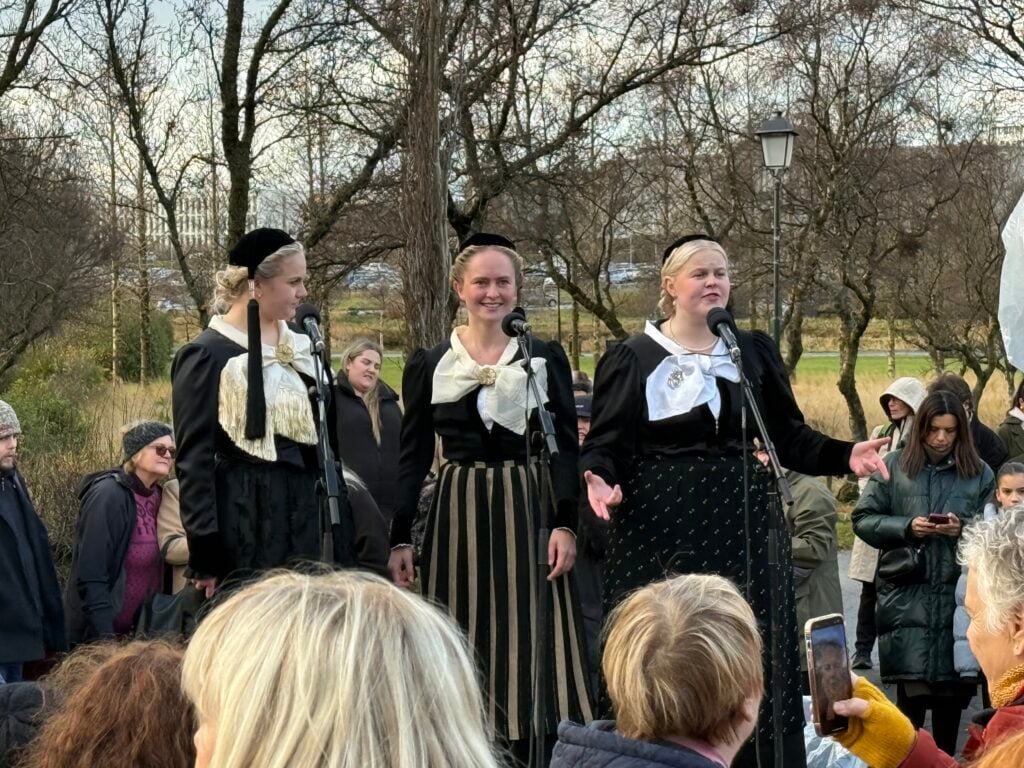
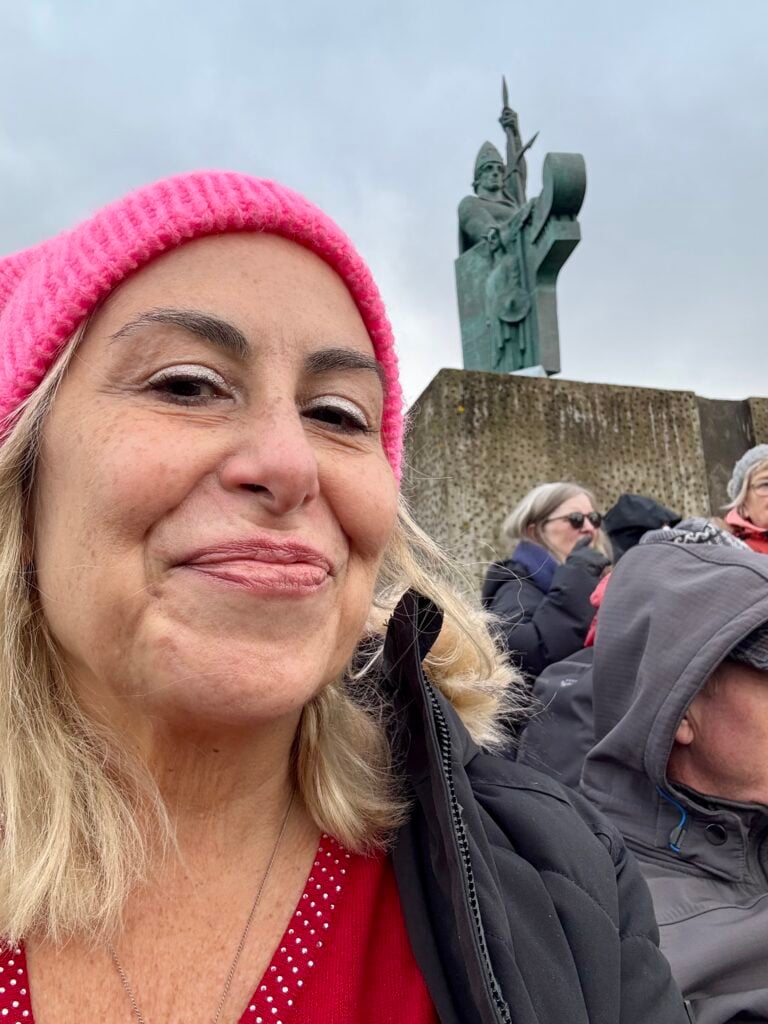
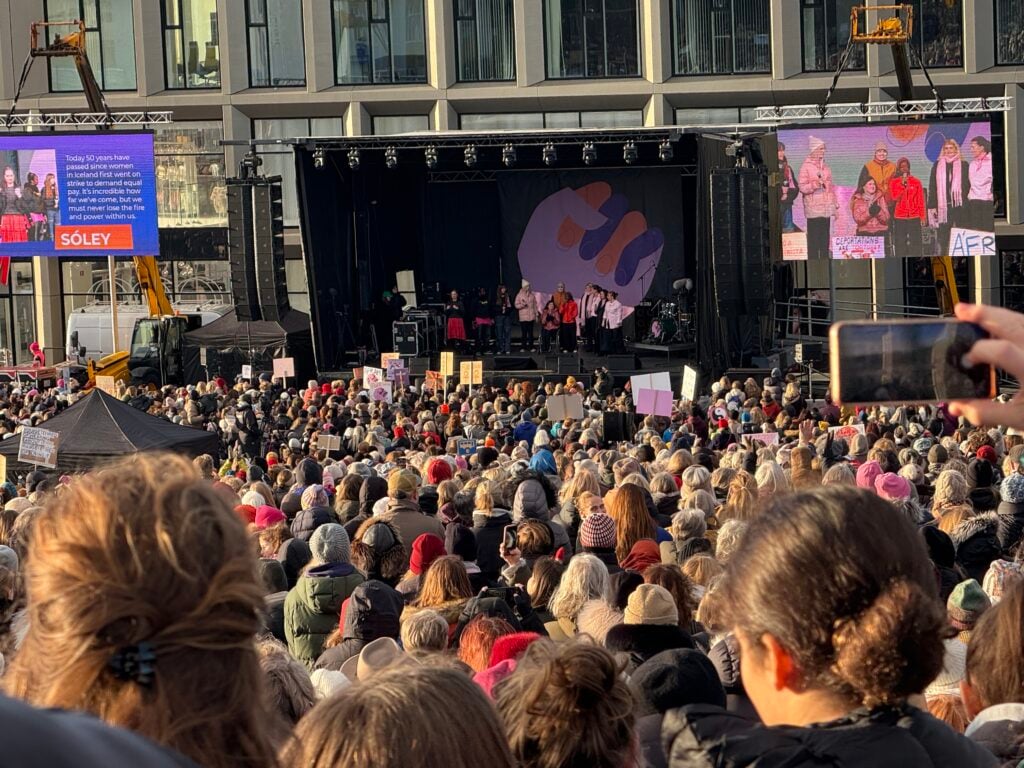
But I still haven’t lost heart. On October 24, I put on my 2017 pussyhat and joined the crowd of 50,000 women, men, children for the 2025 women’s march and protest in Reykjavík. What I saw there bolstered my spirits. The large crowd. The three girls rapping about historic Icelandic women, Hamilton-style. Mina the tiny Maltese in her pink sweater of solidarity. The actress portraying Vigdís, waving from a balcony. The big fuchsia vagina banner. The
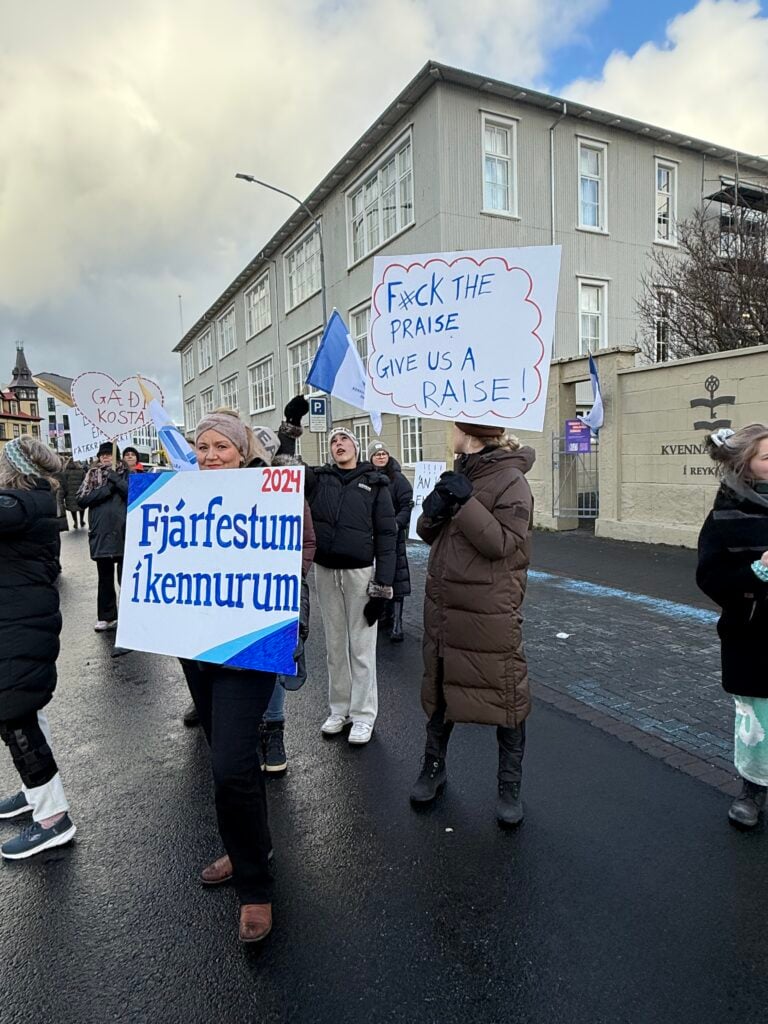
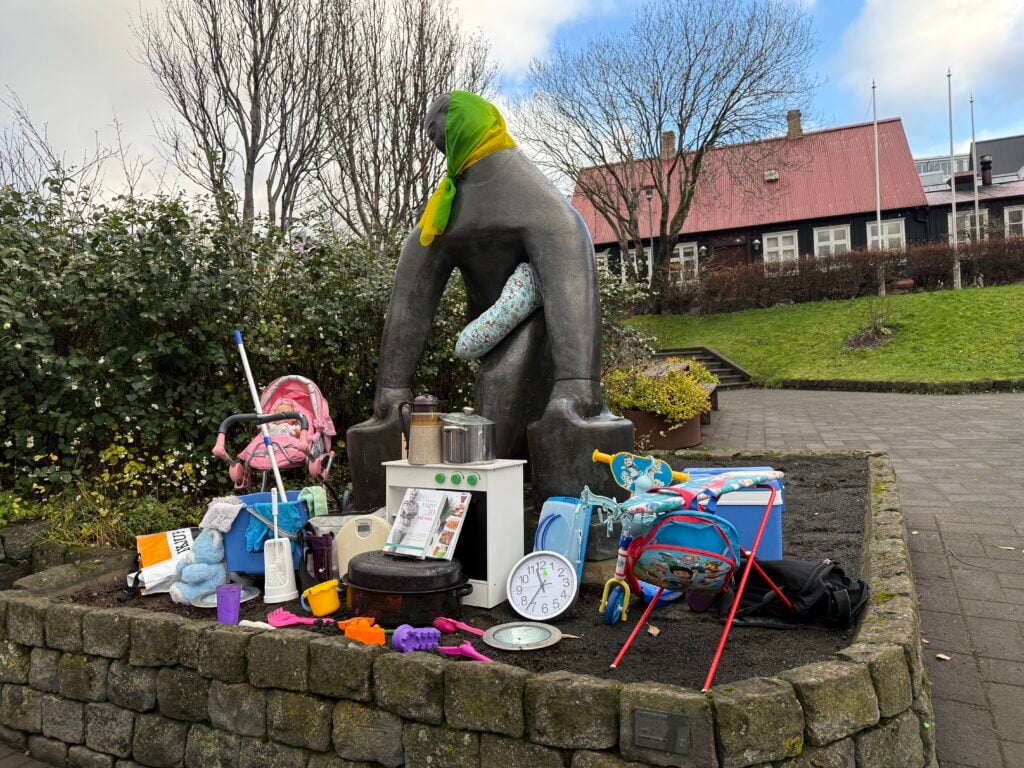
black roasting pan someone had put in front of Ásmundur Sveinsson’s 1937 statue of a woman carrying water (my mom had the same one). The woman next to me scream-singing Paris Paloma’s song, “Labour.” (“All day, every day, therapist, mother, maid, nymph, then a virgin, nurse, then a servant. Just an appendage, live to attend him. So that he never lifts a finger.”) The “Fokk Feðraveldið” (“Fuck Patriarchy”) sign being held by someone standing right
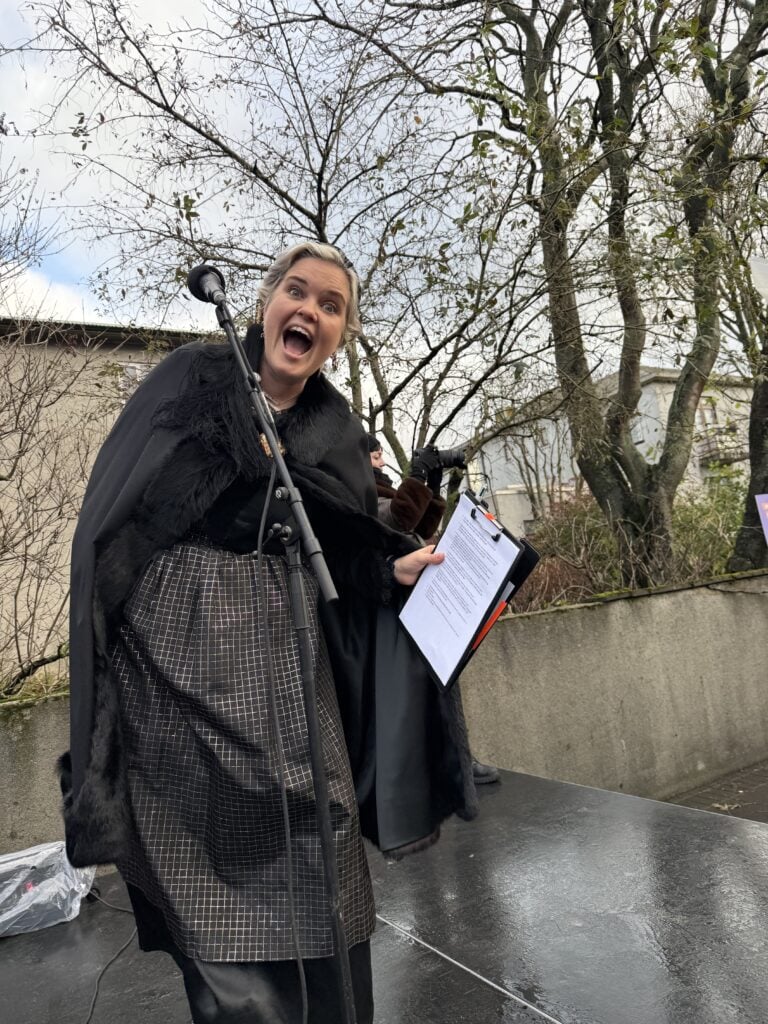
in front of the stage, so it appeared on the big screen throughout all the speeches. And of course the speeches themselves, some of which were translated into English.
“I want a world where my voice carries the same weight as any man’s.”
“I want a world where I can walk home alone at night without fear.”
“I want a world where I don’t get unsolicited dick pics.”
“I want a world where women’s health is valued equally to men’s.”
“I want a world where gender-based violence is not a reality for most women.”
“I want a world where women and nonbinary people don’t have to be submissive or accommodating.”
“I want a world where I make my own decisions about my body.”
“We will show up until we don’t have to anymore.”
“We must never lose the fire and power within us.”
I got tears in my eyes when the crowd started singing the beloved 1975 battle cry, “Áfram Stelpur” (“Go, Girls”). In
English, the lyrics read, in part:
Go, girls — stand on your feet!
Tear out all the old roots
of a thousand years of women’s oppression.
If each individual acts,
our numbers will be our strength
and we will bring about change.
We have votes in our hands
If you’ve fought in struggles before,
hold your head high and let
all doubt disappear
Much is still unanswered yet
for equality is still not real.
When will all people be counted as people,
doing the same work for the same pay?
The moment has arrived!
Let us all join hand in hand
and hold fast to our cause,
though some would drag us backward
Dare I, will I, can I?
Yes, I dare, I can, I will.
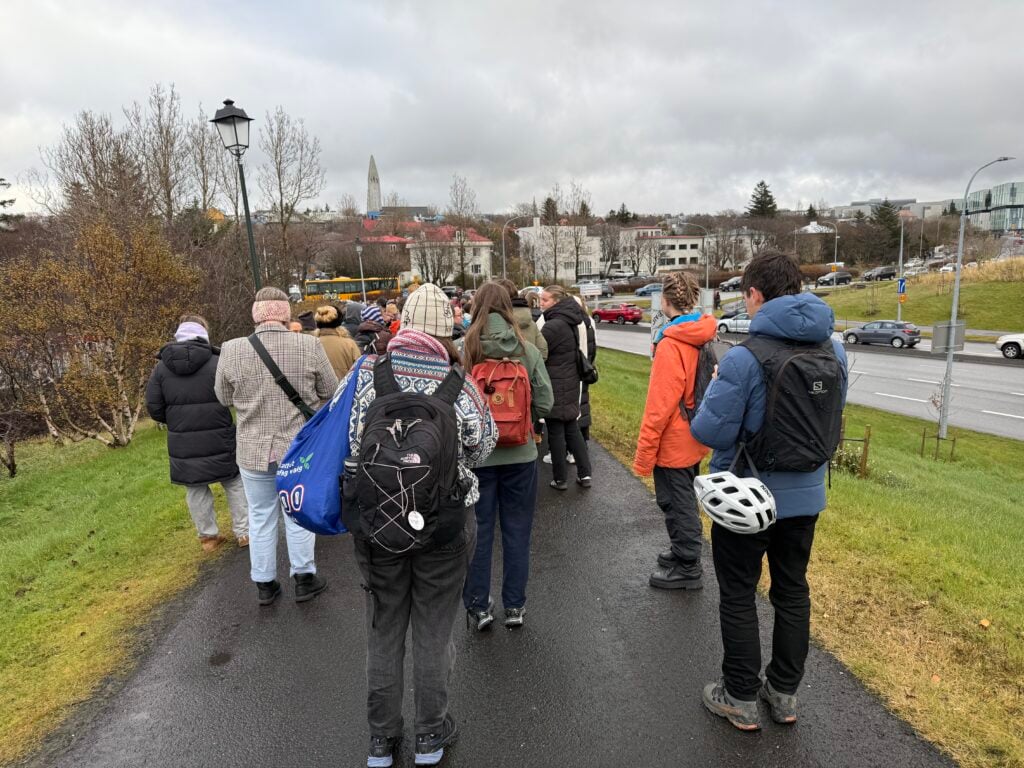
This year, the protesters amassed on Arnarhóll, the famous hill in central Reykjavík. I had arrived early and stood at the top, waiting for the crowd to reach me. In true Nordic fashion, the Icelanders were punctual: The bulk of the crowd got there by 3:00 p.m. sharp, and they departed just as punctually exactly one hour later. At 4:05, the hill was almost empty and I was standing by myself at the top. I headed down for a dinner of Icelandic cod and chips at 101 Bistro, then attended an inspiring all-female poetry reading at the Fischersund perfumery and performance space.
I had thought my Woman’s Day Off experience would end there, but as I made my way down Laugavegur back to my hotel, I passed Hús Máls og Menningar (“The Old Bookshop” bar), where a rock and roll cover band was belting out another powerful and beloved song of hope: “Don’t Stop Believin’.” An enthusiastic crowd was singing along … so this disillusioned American feminist decided to open the door and join them.

By Elizabeth Kuster